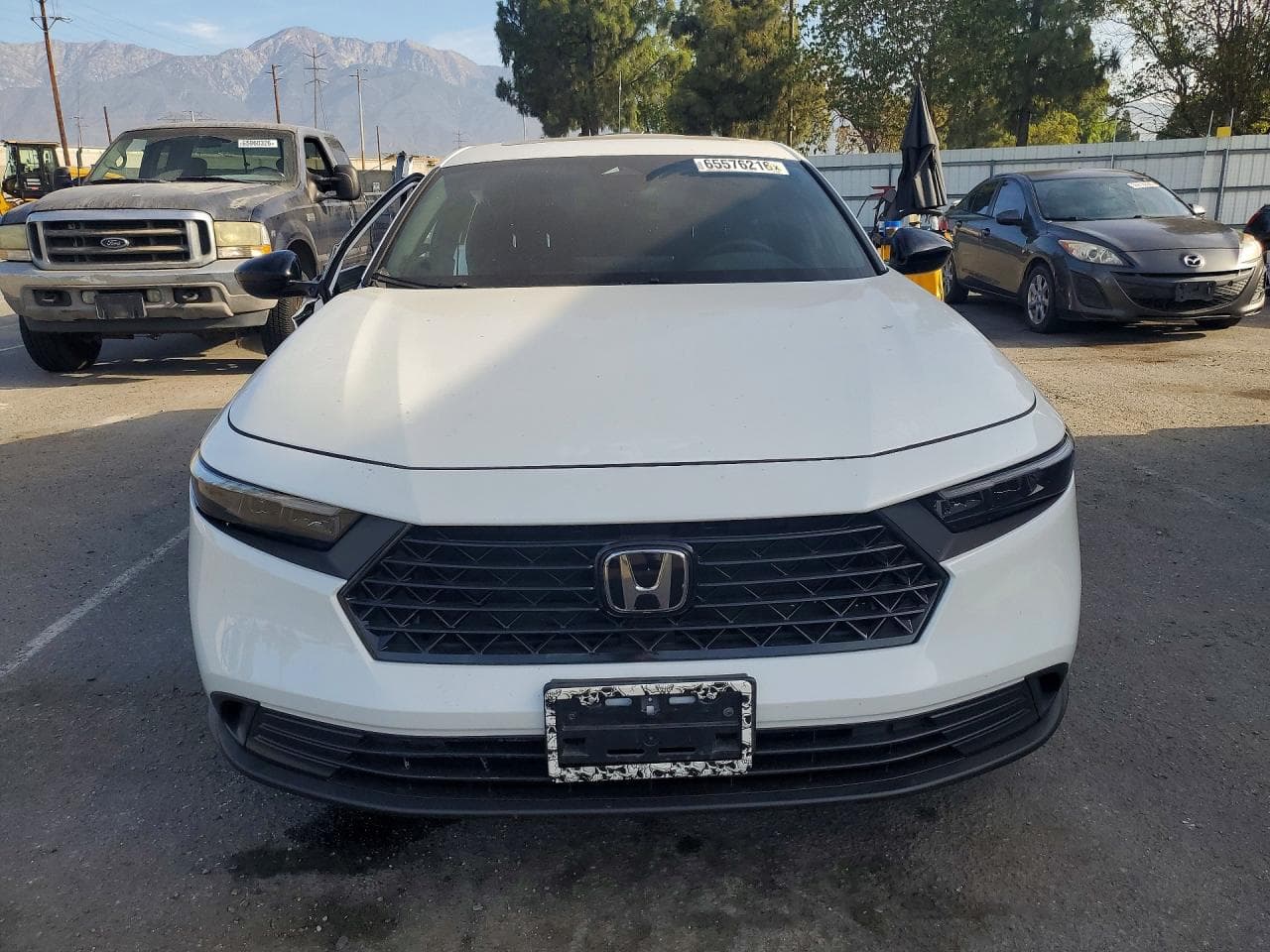
To import a car from the USA to the Dominican Republic from an auction like Copart or IAAI, you don't need to fly anywhere, but you do need to get several things right: the age limit, the vehicle's condition and title, export paperwork, ocean freight, customs, taxes and plates. This guide walks through the whole process in order, with reference numbers and a full budget example, so you know what the car will cost landed in the DR before you place a bid.
First question: can this car legally enter the DR?
Start with eligibility, not price. A lot of buyers lose money by winning a car that Dominican rules won't let in. Run every lot through these three filters first.
1. Vehicle age
The general rule applied in the Dominican Republic under Law 4-07 limits imports of used light vehicles to five years or newer, counted by the vehicle year customs uses (which doesn't always match the calendar year). A car outside that window may not be allowed in.
Rules change and some vehicle types have exceptions, so check with the DGA (Dirección General de Aduanas, the Dominican customs authority) if a car is near the cutoff. Also remember that weeks can pass between purchase and arrival. Don't bet on a model sitting right on the edge of the allowed year.
2. Vehicle condition and title type
This one matters. Decree 671-02 prohibits importing vehicles in salvage condition, and the DGA has reissued that rule in official circulars: a vehicle in salvage condition from a crash, fire or flood is not admitted for road use in the country and may be seized on arrival.
In practice, a salvage-title car can't be shipped to the DR. Before it leaves the US it has to be repaired, pass the state inspection and carry a rebuilt title. If you buy a salvage car for the DR, the repairs, the inspection and the new title all come before shipping and belong in your budget. So:
- Check the sale document on the lot before bidding (our guide on what a salvage title is covers the differences).
- If the lot is salvage, plan the time and cost of getting it to a rebuilt title before it ships. Confirm the details of your case with your customs agent.
- Avoid non-repairable or parts-only certificates if you plan to drive the car in the DR.
Our car auction glossary defines salvage, rebuilt, non-repairable and the other title terms you'll see on lot pages.
3. Reference value and taxes
Dominican import taxes are not based on what you paid at auction. They start from the reference value the DGA holds for that year, make and model. That's why a cheap wrecked car can owe nearly the same taxes as a clean one of the same model. Skip this step and your "bargain" stops being one. The full calculation is below.
The full process, step by step
Here's what importing an auction car looks like end to end:
- Set an all-in budget. Decide what you can spend with the car in the DR, then work back to your maximum bid.
- Find and vet the lot. Year, title type, primary and secondary damage, keys, mileage and yard location.
- Bid and buy through an intermediary, since Copart and IAAI require a license for many lots (see how to buy from Copart without a dealer license).
- Pay and get the release within the auction's deadline to avoid extra charges.
- Tow the car from the yard to a shop or the export port.
- Shop work and inspection, when the car needs it before export.
- US export paperwork: title, invoice, consignee details and the electronic export filing.
- Ship it RoRo or in a container to Caucedo, Rio Haina or Puerto Plata.
- Clear Dominican customs: declaration, assessment and tax payment.
- First plate and marbete (registration sticker), then pick up the car.
Let's take each piece.
Documents you'll typically need
The exact list can vary by case and by current rules, but these documents show up in nearly every used-vehicle import from the US.
In the United States (to export)
- Original title or ownership certificate, free of liens. No original, no export.
- Auction invoice or bill of sale showing the price and buyer details.
- Exporter and consignee details in the DR (name, ID or tax number, address).
- Electronic export information, filed by the shipping line or freight forwarder. US Customs and Border Protection (CBP) reviews the title and paperwork several days before the vessel sails.
In the Dominican Republic (to import and register)
- Bill of lading (B/L) issued by the shipping line.
- Commercial invoice and the title from the country of origin.
- Customs declaration (DUA), filed by your customs agent.
- Tax assessment issued by customs, once paid.
- For the first license plate, the DGII (the Dominican tax agency) asks for its application form plus copies of the title or invoice, the DUA, the tax assessment and the B/L.
Broker tip: keep digital copies of everything from day one. One missing document at any stage stalls the whole chain. When in doubt, confirm the current list on the DGA's website or with your customs agent.
Inland towing: yard to port
Once the car is paid for, it has to leave the auction yard. Two costs get underestimated here:
- Towing or car hauler. Price depends on distance to the port, vehicle size and whether it rolls. A non-runner usually costs more to move.
- Storage. If the car isn't picked up within the free window, the yard charges daily storage. Book transport fast and you save money.
A cheap lot at a far-off yard can end up costing more than a pricier one near an East Coast or Gulf port. Look at location before you bid, not after. In the RCA app, each lot page shows the yard location and a shipping quote to Dominican ports, and RCA Transport handles and tracks inland transport orders.
RoRo vs. container shipping
| RoRo (roll-on/roll-off) | Container | |
|---|---|---|
| How it travels | Driven onto a vehicle deck | Secured inside a container, alone or shared |
| Best for | Cars that start and roll | Non-runners or cars that need extra protection |
| Personal items inside | Usually not allowed | More flexibility, depending on the carrier |
| Timing | Depends on vessel departure | Also depends on loading and unloading the container |
There's no single best option. If the car has heavy damage or doesn't start, get quotes for both. For the full logistics breakdown, read our guide to shipping a car from the USA to the Dominican Republic.
Arrival ports: Caucedo, Rio Haina and Puerto Plata
- Caucedo: east of Santo Domingo, near Boca Chica. Heavy container traffic.
- Rio Haina: west of Santo Domingo. Handles a lot of general cargo and vehicles.
- Puerto Plata: on the north coast. Convenient for Santiago, Puerto Plata and the Cibao region.
Choose based on where you'll collect the car. Slightly cheaper freight to a distant port can cost you more once you tow the car across the island. And because freight is part of the CIF, it also nudges your taxes.
Dominican Republic import taxes: a reference calculation
Taxes are usually the biggest expense after the purchase price. These are the reference rules RCA's calculator uses; the DGA sets the final amounts:
- Start from the vehicle's reference value in the DGA database.
- CIF = value + freight + insurance (2%).
- On the CIF: 20% import duty, 18% ITBIS (VAT), 15% excise tax and 2% CO2 tax.
- First plate $150 and marbete $30.
- 5% adjustment margin and a minimum margin charge of 10.2% on 27% of the CIF.
Example: 2023 Honda Accord EX
A real vehicle from the reference value database, with estimated freight of $850:
| Item | Formula | Amount (estimate) |
|---|---|---|
| Reference value | — | $14,955.00 |
| Freight | — | $850.00 |
| Insurance | 2% of value | $299.10 |
| CIF | value + freight + insurance | $16,104.10 |
| Import duty | 20% of CIF | $3,220.82 |
| ITBIS | 18% of CIF | $2,898.74 |
| Excise tax | 15% of CIF | $2,415.62 |
| CO2 tax | 2% of CIF | $322.08 |
| First plate | flat | $150.00 |
| Marbete | flat | $30.00 |
| Adjustment margin | 5% of CIF | $805.21 |
| Minimum margin charge | 10.2% × 27% of CIF | $443.51 |
| Estimated total | ≈ $10,286 |
This is a reference estimate. In the official assessment, some lines may use different bases, the DGA can adjust the value and rates can change. For a line-by-line explanation, see our guide to Dominican Republic car import taxes, and run your own numbers with the Dominican Republic import tax calculator.
Customs clearance, step by step
When the vessel arrives, the Dominican side begins:
- Arrival and discharge of the vehicle at the port.
- DUA filing by your customs agent, with invoice, title and B/L.
- Review and inspection by customs, which may include checking the VIN, year and condition.
- Assessment of taxes based on the reference value and applicable charges.
- Payment of the assessment.
- Release and pickup from the port, paying any port and warehouse charges.
Cars waiting at the port can rack up storage too. Having complete paperwork and funds ready keeps the car moving.
Plates and marbete
Once released, the car has to be registered:
- First plate: requested from the DGII with its form and copies of the import paperwork (title or invoice, DUA, tax assessment and B/L). It appears as $150 in the reference calculation.
- Marbete: the periodic road-use sticker. It appears as $30 in the reference calculation.
Amounts and requirements can change, so confirm with the DGII when you file.
How long does it take?
There's no fixed number, and be wary of anyone who promises one. Timelines vary based on:
- How fast the car is paid for and released at the auction.
- Distance and towing availability to the port.
- Whether the car goes to a shop before export.
- When the original title arrives and the export is cleared.
- Vessel departure and, for containers, when the box fills.
- Dominican customs clearance.
Think in weeks, not days, and build in slack. This matters for the age rule too: a car right at the age limit has no room for delays.
Total budget: a complete example
Here's an example budget RCA uses for a 2023 Honda Accord Sport Hybrid bought at Copart (California) with a rebuilt title:
| Item | Example |
|---|---|
| Purchase price | $11,900 |
| Buyer fee (reference) | $860 |
| RCA broker fee | $500 |
| Towing to port | $650 |
| Titling (rebuilt title) | $700 |
| Freight to Caucedo | $1,150 |
| DR taxes (estimate) | ≈ $10,286 |
| Approximate total | ≈ $26,046 |
Three honest notes on this example:
- It includes $700 for titling (rebuilt title). If the car is salvage, also budget for the repairs and inspection in the US: without a rebuilt title it can't ship to the DR (Decree 671-02).
- Auction fees are reference figures and can change. Copart also charges a virtual bid fee (up to $160), gate fee ($95), environmental fee ($15) and title mailing fee ($15).
- RCA's fee is tiered by final price: $250 up to $5,000; $350 from $5,001 to $10,000; $500 from $10,001 to $20,000; and $700 from $20,001 up.
Notice the ratio: estimated taxes nearly match the purchase price. That's why your max bid gets calculated backward from your all-in number. For the full fee breakdown, read the true cost of auction cars or use the auction cost calculator.
Common mistakes to avoid
- Bidding without checking the year. A car outside the age window may not get in.
- Ignoring condition and title. A salvage-title car can't be shipped to the DR; it needs a rebuilt title before it leaves the US.
- Calculating taxes from the auction price. The DGA starts from the reference value.
- Forgetting freight and insurance in the CIF. Both raise the tax base.
- Buying far from a port without pricing the tow.
- Leaving the car at the yard while storage piles up.
- Not vetting the damage. Photos don't tell the whole story; learn how to inspect an auction car before bidding and the main auction car damage types.
- Treating an estimate as the final price. Customs does the official assessment.
- Bidding on emotion. Set your max and stick to it; how Copart bidding works explains the mechanics.
How RCA helps you import your car
RCA Auto Broker is the intermediary between you and the auction. You can buy from anywhere in the US or from the Dominican Republic, without traveling and without a dealer license. The app (app.rcaautobroker.com, runs in your browser) gives you:
- Copart + IAAI search with filters for year, price, mileage, damage, title type, keys and location.
- Lot pages with photos, primary and secondary damage, sale document, location and a shipping quote to Caucedo, Rio Haina or Puerto Plata.
- A Total Budget Calculator and a DR Import Tax Calculator built on the reference value database.
- A vehicle history report by VIN.
- Assisted bidding with bid tracking: Received → Bidding → Bid sent → Won / Outbid.
- An export CRM that shows where your car is: Purchase → Transport → Shop → Documents → Inspection → Customs → Arrived in DR → Closed.
If you're starting from scratch, our guide to buying a US auction car from the Dominican Republic and the page on how to start buying at auction give you the full picture. For auctions in general, see buy auction cars.
The bottom line
Importing a car from the USA to the Dominican Republic comes down to clearing three filters before you bid (age, vehicle condition and reference value) and then coordinating each stage well: purchase, towing, paperwork, shipping, customs and plates. Buyers who price the full landed cost first and confirm the rules with the DGA avoid most of the headaches.
RCA Auto Broker works with you from the Copart and IAAI search until the car reaches the DR. Before you bid, estimate your taxes with the Dominican Republic import tax calculator and build your complete budget. Your trusted broker.
Frequently asked questions
How old can a car be to import it into the Dominican Republic?
The general rule applied under Law 4-07 allows used light vehicles up to five years old, counted by the vehicle year customs uses. Rules can change and exceptions exist, so check with the DGA (Dominican customs) before buying a car close to the limit.
How much are import taxes on a car shipped to the Dominican Republic?
It depends on the reference value the DGA assigns to that year and model, plus freight and insurance. For example, a 2023 Honda Accord EX with a $14,955 reference value comes to roughly $10,286 in estimated taxes and fees. That is an estimate; customs sets the final amount.
What documents do I need to import a car into the Dominican Republic?
Typically the original title, the auction invoice or bill of sale, the bill of lading and the customs declaration (DUA) filed by a customs agent. The first license plate also requires the tax assessment and copies of those documents. Confirm the current list with the DGA.
Can I import a salvage title car into the Dominican Republic?
No. A salvage-title car can't be shipped to or enter the Dominican Republic. Under Decree 671-02, the DGA has repeatedly stated that vehicles in salvage condition are not admitted for road use and may be seized. Before it ships, the car has to be repaired and inspected in the US and get a rebuilt title. Confirm the details of your case with your customs agent.
How long does it take to ship an auction car from the US to the Dominican Republic?
It varies. Payment and release at the auction, towing to the port, title arrival, vessel departure and customs clearance all play a role. Plan for weeks, and expect any step to run long.
Which Dominican port should I ship to: Caucedo, Rio Haina or Puerto Plata?
Pick the port closest to where you'll pick up the car and compare freight quotes. Caucedo and Rio Haina serve the Santo Domingo area; Puerto Plata is convenient for Santiago and the north.
Do I need a dealer license or a trip to the US to buy and import an auction car?
No. Through a broker that acts as the intermediary, such as RCA Auto Broker, you can search, bid and pay from anywhere in the US or from the Dominican Republic, with no dealer license.
Can I estimate the total cost before I bid?
Yes, and you should. Add the purchase price, auction fees, broker fee, towing, ocean freight, repairs and estimated taxes. RCA's Dominican Republic import tax calculator and auction cost calculator help you see that number first.
Ready to look at real lots?
Search Copart and IAAI, see the total cost with our fee in plain sight, and track your bid from the app.