Wondering how to buy from Copart without a dealer license? The short answer: you go through a broker. The broker holds the license and the auction account, and places your bid under its name. You pick the car and set your maximum; the broker does the bidding. That's how regular buyers get into lots that are otherwise closed to the public.
Below we walk through why the restriction exists, how buying through a broker actually works, and what to check before you bid so you don't get burned.
Why Copart restricts so many vehicles
Copart is an online auto auction. Most of its inventory comes from insurance companies (total-loss vehicles), plus recovered thefts, fleet units, rentals, and bank repos. Anyone can browse it, but browsing isn't the same as being allowed to buy.
Each state sets its own rules about who can purchase vehicles with certain title types. In many states, salvage-title cars and non-repairable certificates can only be sold to licensed dealers, dismantlers, or recyclers.
So when you log in as a member of the public, you'll see plenty of lots flagged as restricted. The rules depend on where the car sits and what paperwork it carries, so there's no single answer that covers the whole inventory.
What a public buyer can and can't do
- You can browse inventory, view photos, and read the lot details.
- You can buy some clean-title vehicles in certain states, depending on current rules.
- You often can't bid on salvage or other restricted-title vehicles.
- You can't work around state rules from your end: the restriction follows the vehicle's title, not your account.
If title types still feel confusing, start with our guide on what a salvage title is.
How buying from Copart through a broker works
A broker sits between you and the auction. It has the license and account needed to bid on restricted lots, and it bids on your behalf based on your instructions.
With RCA Auto Broker, anyone in any US state, or in the Dominican Republic, can buy without a dealer license. No trip to the yard, no need to set up a business.
Step by step
- Find the car. The RCA app (app.rcaautobroker.com, runs in your browser, nothing to install) searches both Copart and IAAI with filters for year, price, mileage, damage type, title type, keys, and location.
- Review the lot. Each listing shows photos, primary and secondary damage, sale document, and location. You can order a vehicle history report by VIN.
- Run the full numbers. Before you bid, add up everything: price, fees, broker fee, transport, and taxes.
- Place your deposit. At RCA it's the greater of $1,000 or 10% of your max bid.
- Submit your max bid. The broker bids up to that limit. Bid tracking shows each stage: Received, In Offer, Bid Sent, and finally Won or Outbid.
- Pay and arrange pickup. If you win, you pay for the car and charges, and transport gets scheduled. If you're outbid, your deposit returns to your balance.
What it really costs to buy through a broker
The hammer price is just the starting point. Here's what typically gets added:
- Auction buyer fee: tiered by sale price. As a reference, on the fee table RCA uses, an $11,900 purchase carries an $860 buyer fee, and from $15,000 up it's 6%.
- Other auction charges: virtual bid fee (up to $160), gate fee ($95), environmental fee ($15), and title mailing fee ($15), per the reference table.
- Broker fee: at RCA, from $250 (final price up to $5,000) to $700 ($20,001 and up).
- Transportation: towing from the Copart yard to your driveway, a shop, or a port.
- Storage: if the car isn't picked up in time, the yard charges daily.
- Taxes and registration: set by your state, or customs duties if you're exporting.
Auction fees change regularly, so use these figures as a guide and confirm before you bid. For a full breakdown, see auction car fees and total cost.
A worked example
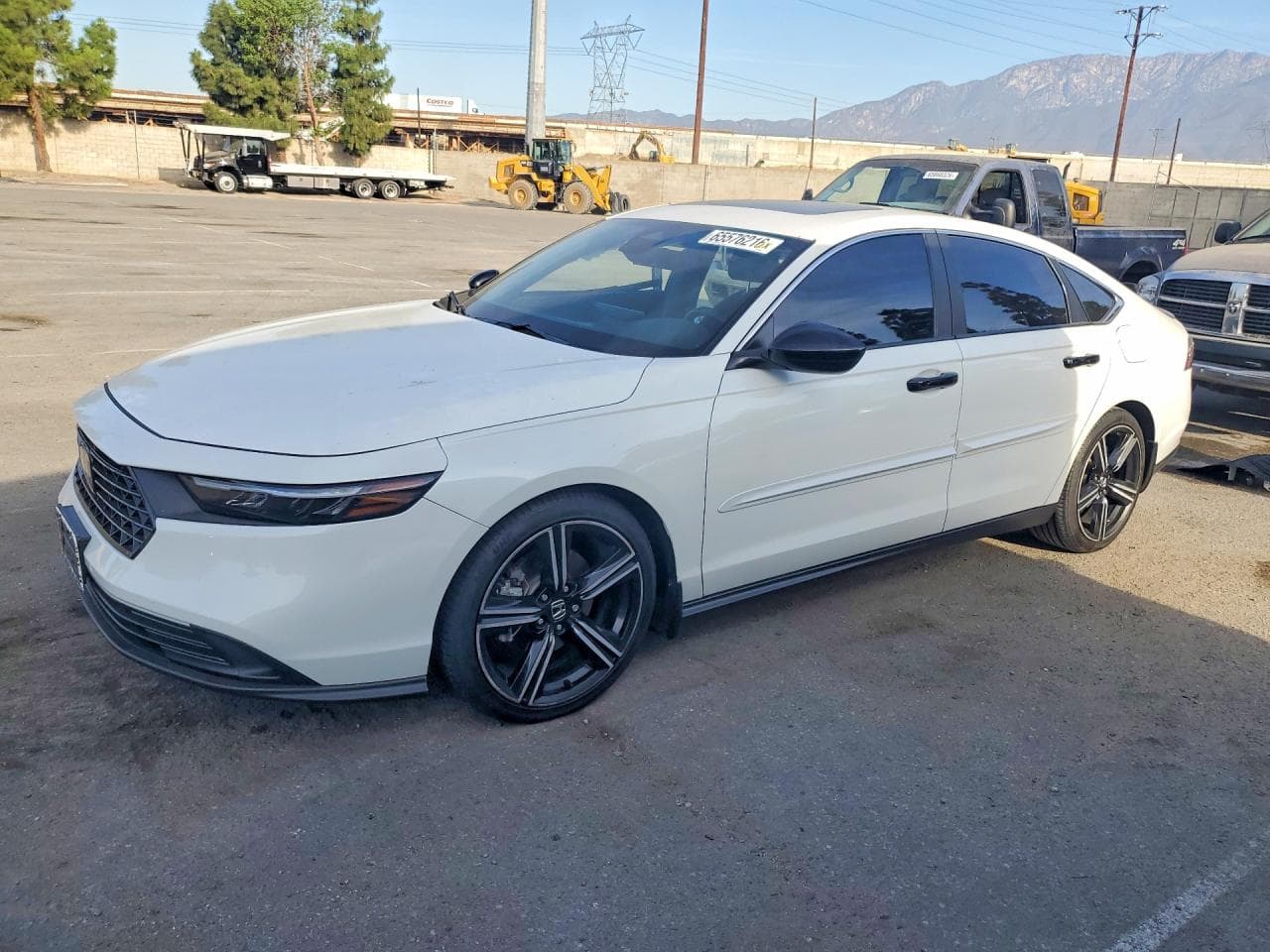
This is an example budget, not a quote: a 2023 Honda Accord Sport Hybrid at Copart in California, rebuilt title. $11,900 purchase + $860 buyer fee + $500 broker fee + $650 towing. For a buyer keeping the car in the US, that's about $13,910 before state taxes and registration.
For a buyer shipping it to the Dominican Republic, add $700 for titling (rebuilt title), roughly $1,150 ocean freight to Caucedo and an estimated $10,286 in Dominican import taxes, for a total near $26,046.
What to check before you bid
Getting access without a license is the easy part. Buying the right car is where the work is:
- Title type. Clean, salvage, and non-repairable titles are very different. The title decides whether you can register, insure, or export the car.
- Actual damage. Photos tell a lot, but not everything. Undercarriage damage, flood exposure, and electrical issues can hide well.
- Keys and run status. Copart notes whether there's a key and whether the car starts or drives, but treat that as a hint, not a guarantee.
- Location. A cheap car 2,000 miles away can end up costing more than a similar one nearby.
- History. A vehicle history report by VIN helps you spot prior accidents, title changes, or odometer red flags.
For a deeper checklist, read how to inspect an auction car before bidding.
Common first-timer mistakes at Copart
These are the ones we see most often:
- Bidding on emotion. Set your max with real numbers and stick to it. There's always another car.
- Forgetting the fees. Comparing the hammer price to a dealer's sticker price gives you the wrong picture.
- Underestimating repairs. A "minor" dent in photos can hide expensive parts behind it.
- Missing the pickup window. Storage fees add up fast if transport isn't lined up.
- Not confirming the title. A title you can't register in your state, or can't export, is a real headache.
Buying from the Dominican Republic
If you're in the DR, the process is the same with two extra legs: ground transport to a US port and ocean freight to Caucedo, Río Haina, or Puerto Plata. Then comes customs.
In the RCA app, each lot includes a shipping quote to those ports, and the DR tax calculator gives you an estimate based on reference values. Keep in mind that Dominican customs (DGA) sets the final amounts. More in our guide on how to buy a US auction car from the Dominican Republic.
The bottom line
You don't need a dealer license to buy from Copart. You need a broker who has one, a complete budget, and a careful look at the lot before you bid.
RCA Auto Broker works as the broker between you and the auction: one place for searching Copart and IAAI, a total budget calculator, vehicle history reports, and bid tracking. You decide what to buy and how high to go; we handle the rest of the process. Your trusted broker.
Frequently asked questions
Can I sign up for Copart without a dealer license?
Yes, you can open a public account, but many vehicles are restricted by state law and title type and can only be bought by licensed businesses. A broker gives you access to those lots.
Do I have to live in the US to buy from Copart through a broker?
No. With RCA Auto Broker you can buy from any US state or from the Dominican Republic without traveling. The whole process happens online.
How much do I need to deposit to place a bid?
At RCA the deposit is the greater of $1,000 or 10% of your maximum bid. If you're outbid, the deposit goes back to your account balance.
Is the winning bid the final price I pay?
No. On top of the hammer price you'll pay the auction's buyer fee and other charges, the broker fee, transportation, and taxes. Auction fees change often, so treat any numbers as estimates.
Ready to look at real lots?
Search Copart and IAAI, see the total cost with our fee in plain sight, and track your bid from the app.